Titanium vs. Wood vs. Plastic Cutting Boards: What Actually Matters
Why Cutting Board Material Actually Matters
Cutting boards aren't just a surface to chop on — the material affects three things that matter in daily use: how easily bacteria can build up in the surface, how much wear your knives take with every cut, and how long the board itself lasts before it needs replacing.
General food safety guidance from the USDA and FDA recommends using separate boards for raw meat and produce, and replacing any board once it develops deep, hard-to-clean grooves — regardless of what it's made of.
Plastic Cutting Boards
Pros: Inexpensive, lightweight, dishwasher-safe, widely available in multiple colors (useful for color-coding raw meat vs. produce boards).
Cons: Softer than titanium or wood, so knife cuts score the surface over time. Those grooves can harbor bacteria and are difficult to fully clean, which is why food safety guidance recommends replacing plastic boards once visibly scored.
Wood Cutting Boards
Pros: Gentler on knife edges than harder materials. Certain wood types have natural moisture-wicking properties that can help draw bacteria below the reach of a cleaning cloth, where it dies rather than spreading on the surface.
Cons: Requires regular oiling to prevent cracking, isn't dishwasher-safe, and can absorb odors and stains from strong ingredients (garlic, beets) if not sealed properly.
Titanium (and Titanium-Coated) Cutting Boards
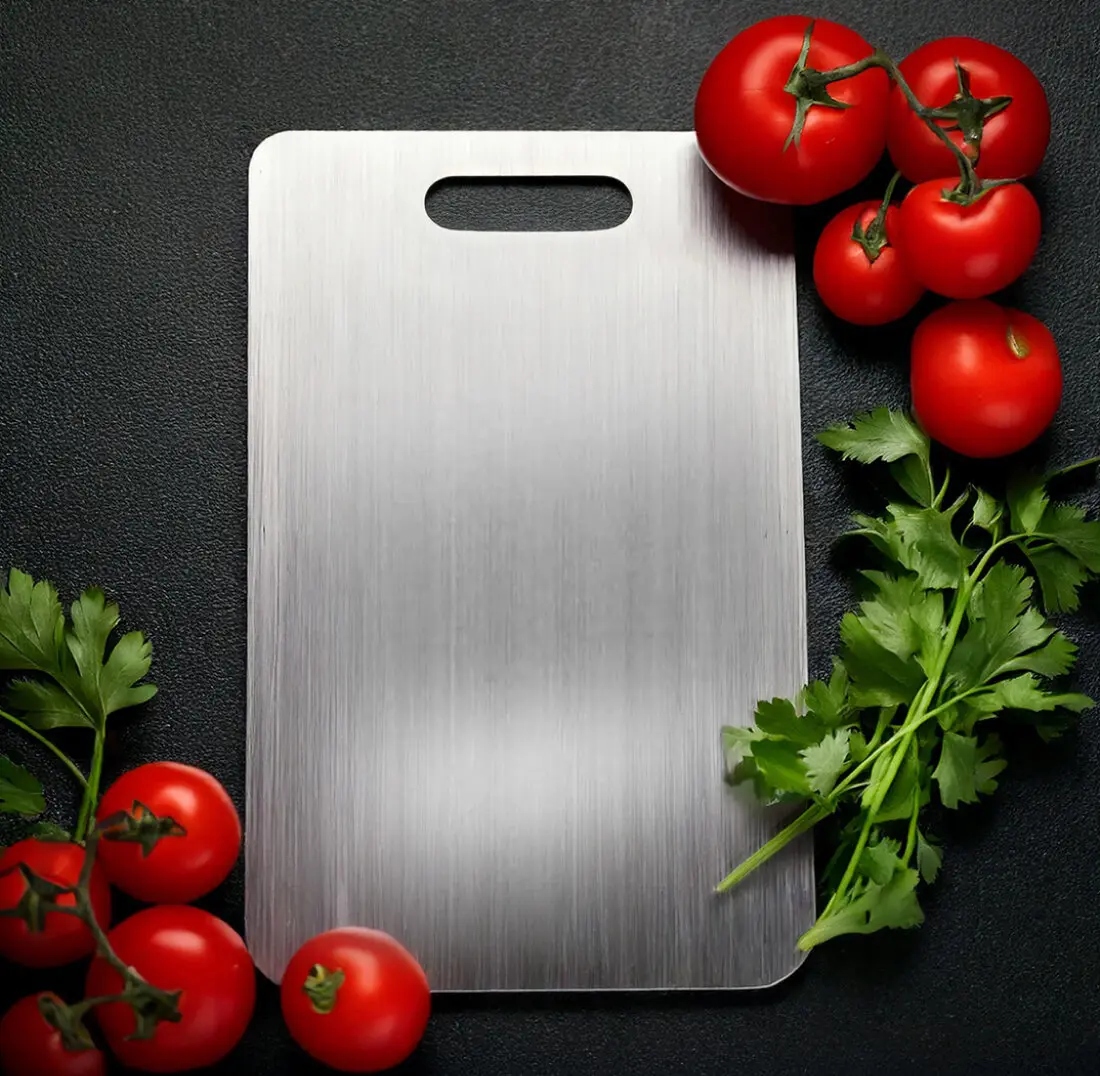
Pros: Non-porous surface doesn't absorb liquid or odors, which limits where bacteria can take hold compared to a scored plastic board. Generally marketed as knife-friendly relative to glass or stone. Typically dishwasher-safe and doesn't warp with heat exposure.
Cons: Pricier than basic plastic. As with any hard, non-yielding surface, heavy daily chopping will still dull a blade faster than a softer wood board over the long run — "knife-friendly" is relative to glass/stone, not a guarantee of zero wear.
An Example: Katori Titanium Cutting Board
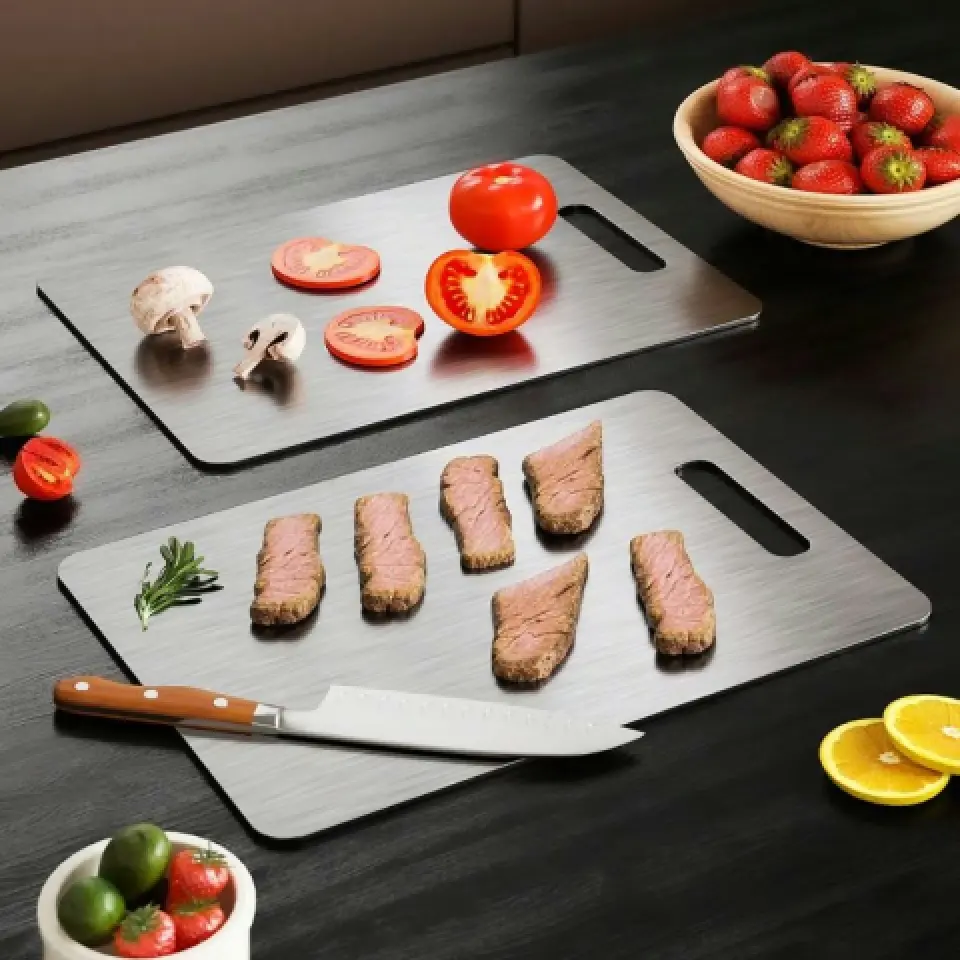
One option in this category is the Katori board — solid titanium construction, double-sided, with a non-porous surface designed to resist bacteria buildup and odor absorption.
Official product page
Side-by-Side Comparison
| Material | Hygiene | Knife Care | Maintenance |
|---|---|---|---|
| Plastic | Scores over time; replace when grooved | Gentle on blades | Dishwasher-safe |
| Wood | Natural moisture-wicking; needs sealing | Gentlest option | Regular oiling, hand wash only |
| Titanium | Non-porous, resists odor/bacteria buildup | Knife-friendly relative to glass/stone | Dishwasher-safe, no oiling needed |
How to Actually Choose
If low cost and dishwasher convenience matter most, plastic is fine — just replace it once it's visibly scored. If you want the gentlest option for expensive knives and don't mind hand-washing and occasional oiling, wood is worth the upkeep. If you want a low-maintenance, non-porous surface and are willing to pay more upfront, titanium fits that gap.
Frequently Asked Questions
Which material is most hygienic?
Non-porous materials like titanium resist bacteria buildup better than scored plastic or unsealed wood, but proper cleaning matters more than material alone.
Do titanium boards dull knives?
Less than glass or stone, but any hard surface will dull a blade faster than wood over heavy daily use.
Plastic or wood for raw meat?
USDA/FDA guidance recommends a dedicated board for raw meat regardless of material, washed thoroughly after each use, and replaced once visibly scored.
This content is for informational purposes only. Individual results and experiences may vary.